How communities can lead urban wilding projects
Written by Cecilia Lindström
Urban wilding is often dismissed as small in scale or limited in scope: window boxes, gardens, leftover spaces. It frequently sits outside formal definitions set by organisations such as the IUCN or Rewilding Britain, which tend to prioritise landscape-scale interventions.
While individual urban sites may be small, their cumulative impact can be profound. Community rewilding initiatives in cities across Europe demonstrate how local action – rooted in place and driven by people – can reinstate the natural processes and relationships that sustain life.
This was the focus of our Wilding Partners meeting this March, which brought together perspectives from two speakers working at different scales of community rewilding:
Charlotte Maddix, Scotland Rewilding Policy and Advocacy Lead at Rewilding Britain / Advocacy Coordinator at The Scottish Rewilding Alliance
Jojanekke van Duijn, ecological practitioner at Krater, a transformative landscape intervention in Ljubljana, Slovenia
A Guide to Community Rewilding
Shortly after starting her new role at the Scottish Rewilding Alliance, Charlotte Maddix found her inbox flooded with messages from people wanting to get involved in rewilding but unsure where to begin. There was little practical guidance for community-led action; in response, she collaborated with Dr Anna Lawrence, Professor at the University of the Highlands and Islands, to create Rewilding: A guide for community groups. While grounded in a Scottish context, the guide is widely applicable, offering valuable direction for community rewilding efforts across Europe.
Drawing on the lived experiences of practitioners and communities across Scotland, the guide offers both inspiration and practical support. It showcases the diversity of work already underway to restore ecosystems, while sharing lessons, tools and resources for those looking to take similar steps. Crucially, it demonstrates how community-scale action can contribute meaningfully to ecological recovery.
The guide is aimed at anyone curious about getting involved – from individuals considering starting a group to established community organisations exploring rewilding. Its scope is deliberately broad, reflecting the diversity of activity in the field: from restoring urban nature sites or reintroducing oysters to local lochs, to large-scale moorland recovery.
Importantly, the guide goes beyond the ecological aspects of rewilding to address the social realities of working collectively, covering everything from getting started and organising a group, to governance, funding and long-term stewardship, as well as communication, participation and co-design. It recognises that community rewilding depends on building confidence and inclusion – particularly in urban contexts, where people may not feel empowered to engage with nature or decision-making.
This makes strong, collaborative relationships essential: not only within local communities, but also with organisations, businesses, landowners and policymakers. These relationships can be supported by wider networks – such as Urban Wilding Hub's Wilding Partners community – as well as storytelling efforts that help people connect more deeply to rewilding and build momentum over time.
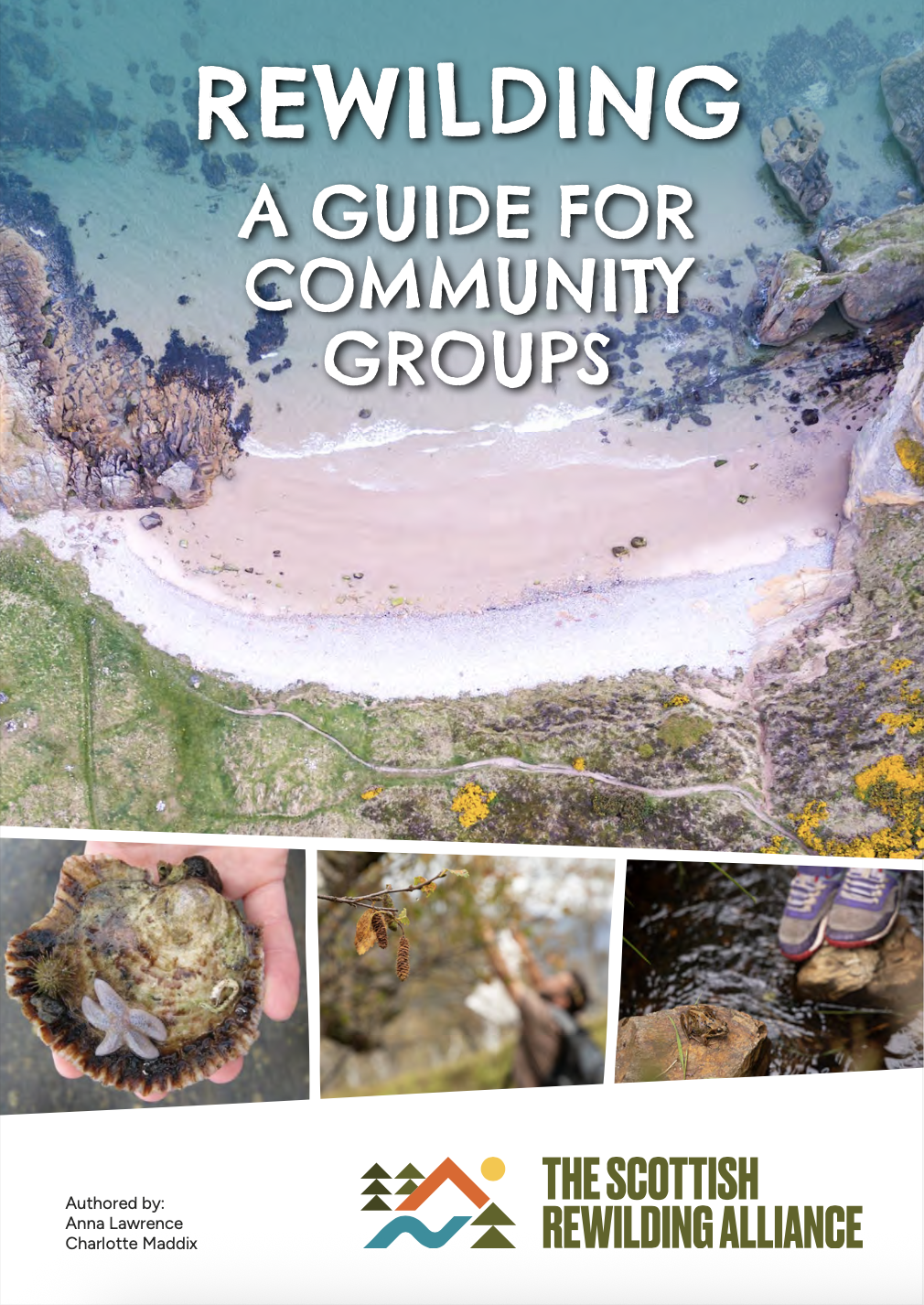
The front cover of the guide
The Complexities of Community-led Urban Wilding
Community-led urban wilding introduces a distinct set of challenges, shaped as much by social dynamics and governance as by ecology. While land ownership is often seen as a route to community empowerment in rewilding, in urban contexts it can be less desirable. For many city-based groups, ownership brings administrative and financial burdens that are difficult to sustain. Instead, partnership emerges as a more viable and effective model. Across the urban examples in the guide, many community groups are working collaboratively with local authorities, often stepping in to manage overlooked or underused spaces that councils lack the resources or mandate to prioritise. Many projects are born out of frustration with conventional approaches to urban land management. Highly manicured green spaces – frequently mown, sprayed and “tidied” – leave little room for biodiversity to thrive.
One of the most important – and often counterintuitive – first steps for community rewilders is to do nothing: to observe, to listen and to understand the existing ecology before intervening. In urban environments in particular, patience can reveal unexpected ecological value that has been eroded over time. What may appear as neglected land can host rare or recovering habitats, which could be unintentionally damaged by well-meaning but premature action.
A patient approach can be contentious, however. Urban wilding is sometimes perceived as neglect rather than care – messy, unmanaged, even unsafe. Concerns around long grass hiding litter or dog waste, or spaces feeling less controlled for children, can generate resistance from local residents who expect tidiness in return for their council tax. This is where community engagement becomes essential. By involving people in the process, urban wilding can build understanding of ecological complexity and help negotiate the balance between wildness and public expectation.
There are also deeper structural tensions at play. Urban wilding sits within broader systems of land ownership, planning and competing land uses. It can intersect with issues of gentrification or “greenification,” where environmental improvements risk contributing to rising property values and the displacement of existing communities. Without a more joined-up approach that protects people’s right to remain in their neighbourhoods, urban wilding risks becoming entangled in wider social inequalities. Addressing these concerns requires recognising wilding not as an isolated environmental intervention, but as part of a broader social and political landscape.
Charlotte highlights examples such as GalGael in central Glasgow, that illustrates the potential of a more integrated approach. Combining access to wild spaces with food growing, skills training and community building, it demonstrates how ecological restoration can sit alongside social renewal. These kinds of projects remind us that urban wilding does not exist in a vacuum – it requires a holistic perspective that brings together environment, culture, livelihoods and wellbeing.
Feral Ecologies: Rethinking Urban Nature
A very different, but deeply complementary, approach to community rewilding can be found at Krater in Ljubljana, Slovenia. Located less than a 30-minute walk from the city’s historic centre, this former construction pit – abandoned in 1994 and left to degrade – has since 2020 been transformed by the collective Trajna into a site of experimentation, learning and community engagement.
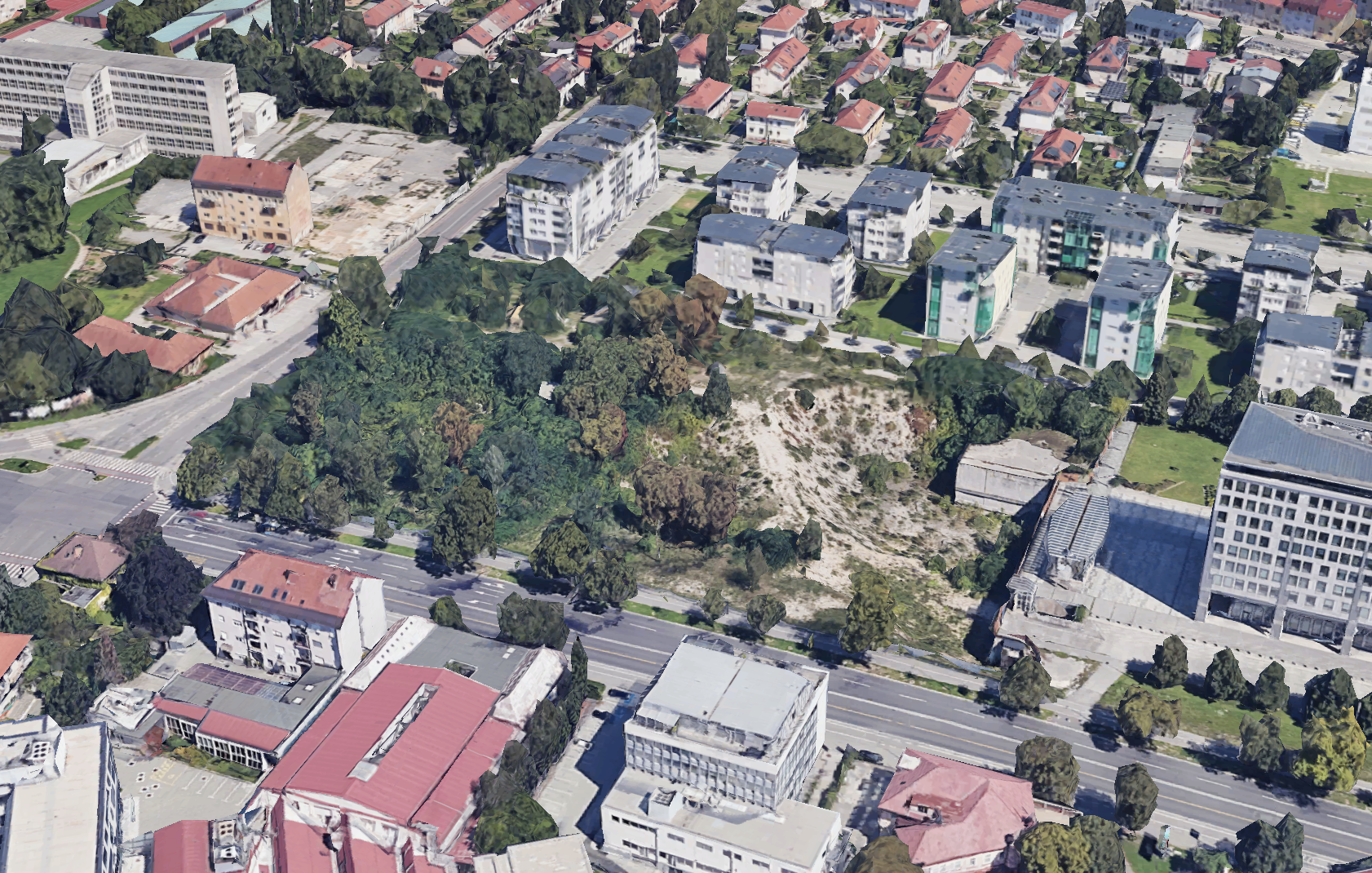
Krater in Google Earth, showing the characteristic crater-like topography of the site
Rather than attempting to restore a preconceived “native” condition, Krater embraces what has emerged: a so-called feral ecology dominated by species typically labelled as invasive. Where conventional conservation often calls for eradication, Krater takes a different approach. As ecological practitioner Jojanneke van Duijn puts it, invasive plants are frequently framed as the greatest threat to biodiversity – yet exist within wider systems shaped by monoculture, chemical use, habitat destruction and climate change. In this light, such species can be understood not as the problem itself, but as a symptom of deeper ecological disruption.
At Krater, opportunistic plants become resources rather than waste – forming the basis of regenerative material cultures. The team experiments with making paper from species such as Japanese knotweed, black locust and Canadian goldenrod, and explores the use of wood and fungi in design and production. Several invasive species are also delicious – Japanese knotweed, for example, can be eaten much like rhubarb and even be used in dishes such as börek. By engaging with these plants as both materials and food, Krater opens up new relationships with invasive species, challenging dominant ideas of value and demonstrating how urban wilding can support local economies and cultures grounded in ecological stewardship.
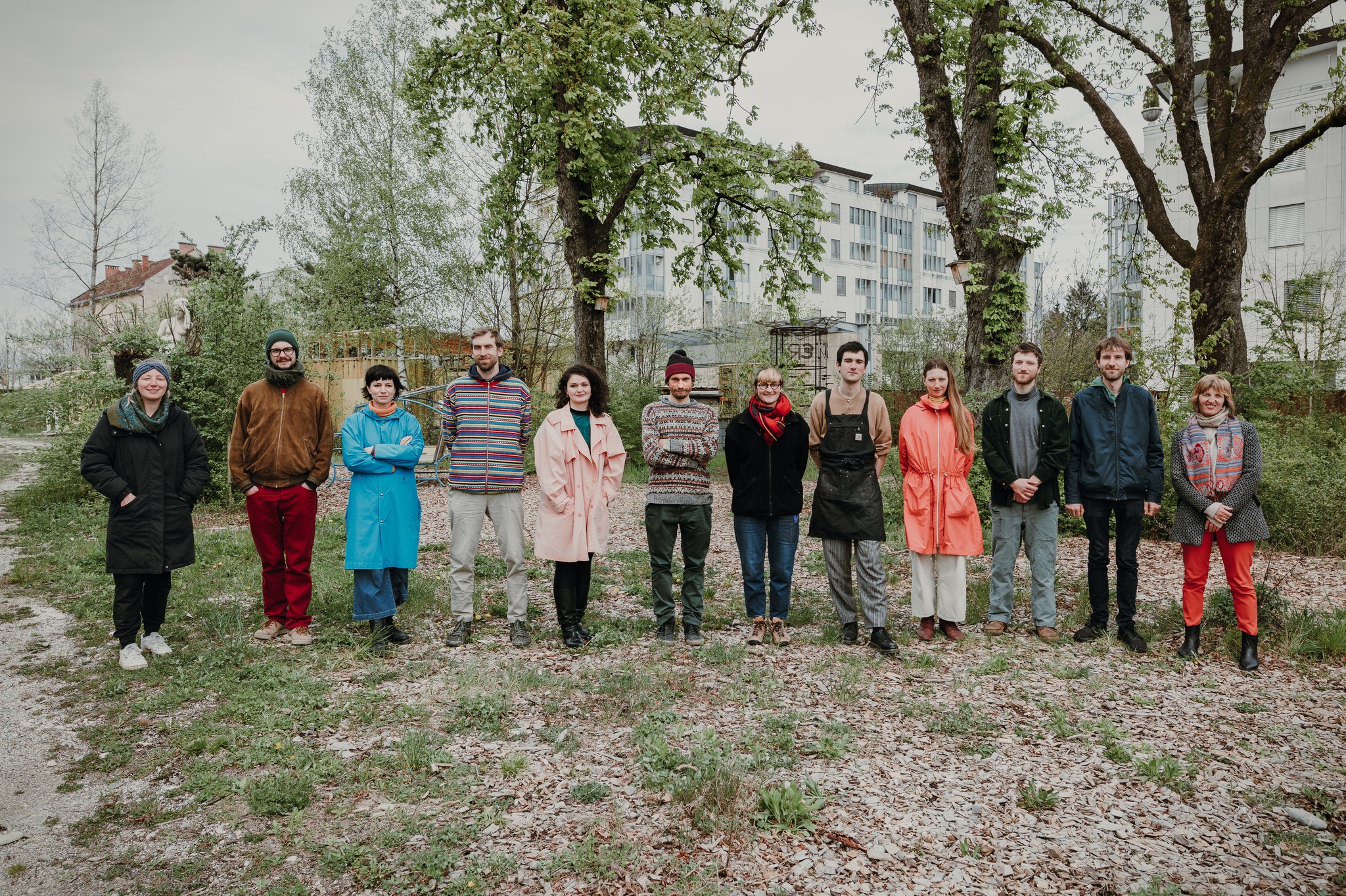
Some of the people involved in managing Krater (Image source: Trajna)
Krater is open to the public twice a week, inviting people into what can initially feel like an unfamiliar or even unsettling landscape – messy, shifting and not conventionally “managed.” Leaving the doors open to the community has led to serendipitous encounters, with businesspeople, dog walkers and elderly residents wandering in and engaging with the space.
The project does not shy away from controversy. It has faced local resistance, particularly around aesthetics and expectations of order, while simultaneously gaining growing international recognition. By creating space for people to experience and participate in this evolving ecology, Krater raises fundamental questions: who has the right to urban ecosystems, and how might cities be designed not just for humans, but as multispecies environments?
As a continental example, Krater expands the conversation around community rewilding in an urban context, showing that it is not only about restoring what was lost, but also about engaging with what has emerged, and finding new ways to live alongside it.
Closing Thoughts
The perspectives from Charlotte and Jojanneke highlight that community rewilding is not a single approach, but a spectrum of practices shaped by place, people and possibility. Community-led urban wilding asks us to embrace complexity. It requires negotiation: between tidiness and wildness, human needs and ecological processes, immediate results and long-term change. It also calls for humility – to observe before acting, to work with what is already there, and to recognise that restoration is as much a social process as an ecological one.
Perhaps most importantly, successful examples demonstrate that meaningful change does not always begin with large-scale interventions, but with small, collective acts of care, curiosity and persistence. Whether through reclaiming a verge, forming a local group or reimagining a neglected site, these efforts build momentum – reshaping not only landscapes, but relationships between people and the living world around them.